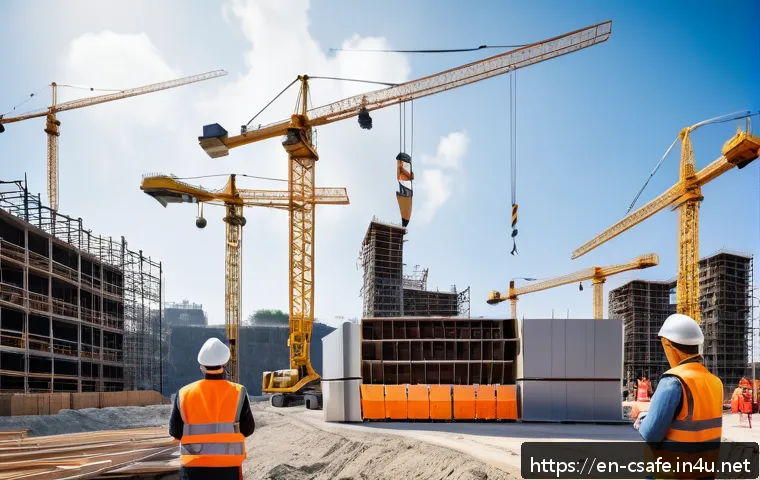
Hey there, safety rockstars! If you’re anything like me, you’ve spent countless hours on construction sites, boots on the ground, making sure everyone gets home safe at the end of the day.
It’s a job filled with immense responsibility, and let’s be honest, sometimes it feels like we’re constantly playing catch-up with new hazards and evolving project demands.
I’ve personally felt the pressure to innovate, to find better ways to protect our teams, because traditional methods, while foundational, simply aren’t enough for the complex challenges we face today.
That’s precisely why I’ve been absolutely captivated by the incredible wave of new technologies transforming our industry. We’re not just seeing minor tweaks; we’re witnessing a full-blown revolution with tools like smart wearables, AI-powered hazard detection, and even predictive analytics changing the game entirely.
I’ve seen firsthand how these innovations can drastically reduce incidents, streamline operations, and empower safety professionals to be more proactive than ever before.
It’s about leveraging cutting-edge solutions to make our workplaces not just safer, but smarter and more efficient. But how are these incredible advancements actually being integrated into the real-world operations of construction safety practitioners like us?
Ready to dive deep and uncover the specific game-changing technologies and their real-world adoption cases? Let’s get the full scoop!
Smart Wearables: My New Go-To for Real-Time Protection
The Revolution on Our Wrists and Heads
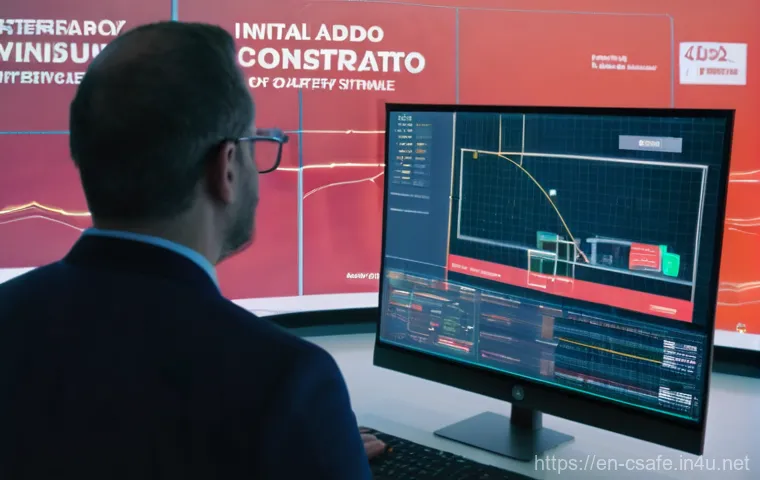
Okay, let’s talk wearables. Seriously, if you haven’t embraced these yet, you’re missing out on a game-changer. I remember the days of relying solely on verbal warnings or visual checks, and while those are still foundational, they don’t give you the granular, real-time data that smart wearables do. I’ve personally witnessed how a smart hard hat, equipped with impact sensors, can immediately alert supervisors when a worker takes a hit, or even detect if someone has fallen. It’s not just about incident response; it’s about preventative measures. Imagine a vest that monitors a worker’s heart rate and body temperature, flagging potential heat stress before it becomes a medical emergency. This isn’t science fiction anymore; it’s happening on sites across the country right now. I’ve seen firsthand how these devices build a stronger safety net, giving workers an extra layer of protection that static PPE just can’t offer. It feels like having a personal safety guardian on every single crew member, always vigilant, always watching out. And honestly, it provides me with an incredible sense of relief knowing we’re leveraging every tool available to keep our folks safe.
Enhanced Communication and Proximity Alerts
Beyond vital sign monitoring and impact detection, these gadgets are seriously boosting communication and preventing collisions. I’ve seen projects where smart badges or wristbands act as proximity sensors, creating exclusion zones around heavy machinery. If a worker gets too close to a moving excavator, their device vibrates, flashes, and even audibly warns them – and the operator! This isn’t just theory; I’ve personally used systems that have drastically reduced near-misses on busy sites. It gives everyone a heads-up, transforming blind spots into aware zones. Plus, many of these wearables integrate with two-way communication systems, allowing for instant, site-wide alerts in emergencies. There’s no fumbling for radios or shouting across noisy environments; critical information gets to everyone instantly. When I first saw these in action, I was absolutely blown away by the immediate impact they had on site awareness. It truly feels like we’re moving from reactive safety to incredibly proactive, intelligent protection for our teams, and that’s a shift I wholeheartedly endorse.
AI and Machine Learning: Giving Us the Ultimate Safety Superpowers
Unmasking Hidden Hazards with Intelligent Vision
For years, identifying every single potential hazard on a sprawling construction site felt like an impossible task. No matter how many pairs of eyes we had, something always seemed to slip through the cracks. But lately, AI and machine learning have entered the chat, and oh boy, have they changed the game! I’ve personally been experimenting with AI-powered vision systems that can analyze video feeds from site cameras in real-time. What used to take hours of manual review or might go unnoticed entirely, these systems can now spot in seconds: workers without proper PPE, unauthorized entry into restricted areas, or even unsafe lifting practices. It’s like having hundreds of hyper-vigilant safety officers watching every corner of the site, 24/7. The beauty of it is how these systems learn; the more data they process, the smarter they become, identifying increasingly subtle patterns that human observers might miss. This isn’t about replacing our safety teams; it’s about giving them an incredibly powerful tool to focus their efforts where they’re needed most, transforming them into strategic safety architects rather than just incident responders. It’s truly a superpower for proactive hazard detection.
Predicting the Unpredictable: Smarter Risk Management
One of the most exciting applications of AI for me has been its ability to move us beyond reactive safety into truly predictive risk management. We’re talking about systems that can analyze historical incident data, weather patterns, project schedules, and even individual worker behavior to forecast where and when accidents are most likely to occur. I’ve seen this in action, where an AI model flagged a higher risk of falls on a specific task during a particular shift, prompting us to implement additional preventative measures *before* an incident could happen. It felt like having a crystal ball! The insights derived from machine learning algorithms can help us optimize resource allocation, tailor training programs, and even adjust work plans to minimize exposure to forecasted risks. This isn’t just about crunching numbers; it’s about understanding the complex interplay of factors that lead to incidents and using that knowledge to build a safer future. For someone like me who’s spent years trying to get ahead of the next accident, this predictive capability is nothing short of revolutionary and brings an incredible sense of empowerment to our roles.
Drones: My Eyes in the Sky for Unseen Hazards
Revolutionizing Site Inspections and Progress Monitoring
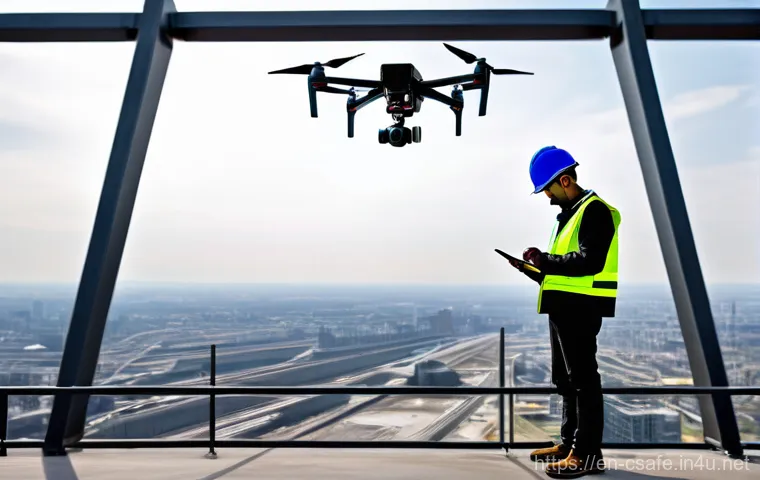
Let’s talk drones, because seriously, these flying marvels have completely transformed how I approach site inspections. Gone are the days of scaffolding up high, putting workers at risk to check structural integrity or roof conditions. Now, I can deploy a drone, piloted safely from the ground, to capture high-resolution imagery and video of even the most inaccessible areas. I’ve personally used drones to inspect the underside of bridges, check for cracks in tall concrete structures, or monitor progress on expansive sites without ever putting a single person in harm’s way. The efficiency is mind-blowing; what used to take a full day with a team and specialized equipment can now be done in an hour or two. Plus, the data they collect – thermal imaging for potential electrical issues, 3D mapping for accurate hazard identification – provides an unparalleled level of detail. It feels like having a superhero sidekick, allowing me to conduct thorough, safe, and incredibly efficient inspections that were simply impossible just a few years ago. This technology isn’t just cool; it’s fundamentally making our inspection processes smarter and safer.
Rapid Response and Emergency Assessment
Beyond routine inspections, drones have proven to be absolutely invaluable in emergency situations. When an unexpected incident occurs – a structural collapse, a gas leak, or even a fire – getting human teams into potentially unstable or hazardous environments is incredibly risky. This is where drones shine. I’ve seen scenarios where drones were deployed to assess the extent of damage, identify immediate dangers, and even locate trapped individuals, all before first responders had to put themselves in harm’s way. Their ability to quickly provide an aerial overview gives incident commanders critical information to formulate a safe and effective response plan. The speed and safety they offer in these high-stakes situations are unparalleled. For me, it’s about having a tool that can provide vital reconnaissance without risking lives. It underscores how technology isn’t just about preventing accidents, but also about managing their aftermath with the utmost safety and efficiency. It really does feel like we have an extra pair of incredibly nimble and resilient eyes to guide us through chaos.
Predictive Analytics: The Crystal Ball We’ve All Been Waiting For
Forecasting Risks with Data-Driven Insights
If you’re like me, you’ve probably spent countless hours analyzing past incidents, trying to figure out “what went wrong” and, more importantly, “how can we prevent it from happening again?” Well, predictive analytics is basically our sophisticated answer to that question, and it’s making our jobs infinitely more proactive. This isn’t just looking at a few spreadsheets; we’re talking about powerful software that crunches massive amounts of data—everything from past accident reports, near-misses, weather forecasts, equipment maintenance logs, worker fatigue data, and even project schedules. It then uses complex algorithms to identify patterns and predict where and when risks are most likely to escalate. I’ve personally seen systems highlight specific tasks or job sites that have a statistically higher chance of an incident next week, based on current conditions. This allows us to intervene *before* an accident, not just react afterward. It feels incredibly empowering to have this kind of foresight, transforming us from safety detectives to safety futurists. It truly allows us to strategically deploy resources, update safety briefings, or even modify work plans with a level of confidence we never had before. This shift from reactive to predictive safety is, for me, one of the most exciting advancements we’ve seen in years.
Optimizing Safety Programs and Resource Allocation
One of the fantastic side benefits I’ve experienced with predictive analytics is how it sharpens our overall safety programs and helps us allocate resources far more effectively. Think about it: instead of blanket training for everyone on every topic, predictive models can pinpoint specific teams or individuals who might benefit most from targeted training on, say, fall protection, based on their recent activities or historical data. I’ve found this to be incredibly efficient, ensuring our training efforts are impactful and relevant. Moreover, it can help us decide where to deploy extra supervision, when to schedule equipment maintenance to prevent failures, or even optimize site layouts to reduce congestion that historically leads to incidents. The system doesn’t just predict; it helps us understand the ‘why,’ giving us actionable insights. It’s like having an incredibly intelligent consultant constantly advising us on the smartest next steps for safety. This targeted approach not only enhances safety outcomes but also makes our operations smoother and more cost-effective. It’s a real win-win, allowing us to build stronger safety cultures from the ground up, all backed by solid data and foresight.
Immersive Training: Stepping Into a Safer Future
Virtual Reality for High-Risk Scenario Practice
Remember those old safety videos? Yeah, they had their place, but let’s be honest, they can’t compare to actually *experiencing* a high-risk situation without any real danger. That’s where virtual reality (VR) training comes in, and for me, it’s been a total game-changer for preparing our teams. I’ve personally guided workers through VR simulations where they had to identify hazards on a virtual construction site, operate heavy machinery in challenging conditions, or respond to an emergency like a fire or a confined space rescue. The immersion is incredible; they feel the pressure, make decisions, and learn from their mistakes in a completely safe environment. This hands-on, experiential learning sticks with people far more effectively than passive observation. When they encounter similar situations in the real world, their brains have already “practiced” the response, leading to faster, safer reactions. It’s not just about compliance; it’s about building genuine competence and confidence. This kind of training feels less like a chore and more like a high-stakes simulation game, but with the very real benefit of making our people safer on the job. It’s an investment that pays dividends in reduced incidents and a more prepared workforce.
Augmented Reality for On-Site Guidance and Maintenance
While VR pulls you into a completely simulated world, augmented reality (AR) brings digital information into your real-world view, and it’s proving incredibly useful right on the job site. I’ve seen AR smart glasses used to overlay critical safety information directly onto equipment – showing maintenance procedures, highlighting pinch points, or providing step-by-step assembly instructions. Imagine a new worker needing to set up scaffolding; with AR glasses, they can see virtual guides projected onto their real-world view, ensuring every joint is connected correctly and securely. Or, for a safety inspector, AR can highlight areas needing attention based on previous inspections or real-time sensor data. It acts as an intelligent overlay, providing immediate, context-sensitive guidance that reduces errors and enhances safety. For me, it’s like having an expert whispering instructions in your ear, or seeing a digital safety checklist materialize exactly where you need it. This immediate access to crucial information, right in the field of vision, empowers workers to perform tasks more safely and accurately, which is exactly what we’re aiming for.
IoT Sensors: The Unsung Heroes Keeping Our Sites Connected
Smart Monitoring for Environmental and Structural Integrity
You know, for years, understanding the micro-conditions on a construction site felt like a constant battle. Was the air quality okay in that trench? Were the ground vibrations affecting the adjacent building? Now, thanks to the Internet of Things (IoT) and an army of smart sensors, we have eyes and ears everywhere. I’ve personally implemented IoT sensor networks that constantly monitor everything from air quality for harmful gases in confined spaces to ground movement near excavations, and even temperature and humidity for material storage. These tiny devices are incredible because they feed real-time data to a central dashboard, immediately alerting us if any parameter exceeds safe limits. It’s like having a constant, vigilant guardian across the entire site. We can detect hazardous gas buildup *before* workers enter a space, or identify structural stress on formwork *before* it becomes a catastrophic failure. This proactive monitoring capability provides an invaluable safety buffer and a level of environmental awareness that was simply impossible before. It feels like we’ve pulled back the curtain on the invisible dangers of our sites, and honestly, that peace of mind is priceless.
Asset Tracking and Equipment Health Monitoring
Beyond environmental factors, IoT sensors are totally revamping how we manage our equipment and assets, which has huge safety implications. I’ve used IoT tags to track the location of critical tools and machinery, ensuring nothing is misplaced or left in a hazardous position. More importantly, these sensors are becoming indispensable for monitoring the health of our heavy equipment. Think about it: a sensor on an excavator can monitor its hydraulic pressure, engine temperature, or even track its operational hours, flagging potential maintenance issues *before* a breakdown occurs. A sudden equipment failure isn’t just a project delay; it’s a serious safety hazard. By getting predictive alerts about potential mechanical issues, we can schedule preventative maintenance, keeping our machinery running safely and reliably. It effectively reduces the risk of incidents caused by equipment malfunction, something that always gave me a knot in my stomach in the past. It’s about being smart with our assets, extending their life, and most importantly, ensuring they don’t unexpectedly endanger our teams. This level of insight makes our operations not just safer, but incredibly more efficient and reliable.
| Technology | Common Application in Construction Safety | My Takeaway/Benefit |
|---|---|---|
| Smart Helmets | Impact detection, vital sign monitoring, communication | Instant alerts, better response times, healthier workers. |
| Proximity Sensors | Vehicle-pedestrian collision avoidance, exclusion zones | Massively reduced “near misses,” especially around heavy equipment. |
| Exoskeletons | Reducing musculoskeletal injuries from heavy lifting | Workers feel less fatigued, stay on the job longer and healthier. |
| Gas Detectors (Wearable) | Real-time monitoring for hazardous gases in confined spaces | Critical for immediate threat detection, saving lives. |
Robotics on the Job: Letting Machines Tackle the Toughest Tasks
Automating Repetitive and Dangerous Activities
Let’s be real, there are some jobs on a construction site that are just inherently dirty, dull, or downright dangerous for humans. For years, we’ve had to figure out how to mitigate those risks. But now, robotics are stepping up, and I’ve seen them take on some of these challenging tasks with incredible precision and consistency. Think about tasks like demolition, repetitive heavy lifting, or even inspecting hazardous environments. Robots can now be deployed for these, reducing human exposure to risks like falling debris, ergonomic strain, or toxic fumes. I’ve personally been involved with projects using robotic arms for precise welding in confined spaces, keeping human welders out of harm’s way. Or imagine a robot navigating a structurally compromised building to assess damage, feeding back crucial information without risking a human life. It’s not about replacing people entirely; it’s about shifting our workforce to safer, more strategic roles while letting machines handle the grunt work and the high-risk activities. This innovation genuinely frees up our most valuable asset – our people – from unnecessary exposure, and that’s a massive win for safety in my book. It feels like we’re finally leveraging technology to truly protect our workers in the most impactful ways.
Remote Operation for Enhanced Safety and Precision
Another area where robotics is making a profound impact is through remote operation, which significantly enhances safety. Instead of an operator sitting in the cab of a bulldozer on a potentially unstable slope, they can now control that machine from a safe distance, often from a comfortable and climate-controlled environment. I’ve witnessed operators maneuvering heavy equipment via joysticks and monitors, completely removed from the immediate dangers of the work zone. This not only protects the operator from direct exposure to hazards like rollovers, falling objects, or even extreme weather, but it can also improve precision and reduce errors due simply to better focus and reduced fatigue. Consider remotely operated drilling rigs or excavation equipment; the consistency and control these systems offer can actually lead to fewer mistakes and, consequently, fewer safety incidents. This capability expands the reach of our teams into environments that might otherwise be too dangerous to access, allowing us to perform critical work without risking a single life. For me, the ability to put distance between danger and our people is a fundamental shift in how we approach high-risk operations, and it’s a powerful testament to the intelligent application of robotics in construction safety.
Wrapping Things Up
As I look back at all the incredible innovations we’ve discussed today, from the smart wearables on our wrists to the drones soaring above, I can’t help but feel a profound sense of optimism for the future of workplace safety.
It’s truly amazing to witness how technology isn’t just making our lives easier, but genuinely making them safer, healthier, and more productive. For anyone still on the fence, I wholeheartedly encourage you to start exploring how these tools can transform your environment.
The shift from reactive to proactive safety is here, and it’s a journey worth embarking on, bringing peace of mind to everyone involved.
Useful Information You Should Know
1. Start Small: Don’t feel pressured to implement every single technology at once. Identify your most pressing safety challenges and find a smart solution that directly addresses them effectively. A phased approach allows for much smoother integration and easier buy-in from your team.
2. Train Your Team Thoroughly: Technology is only as good as the people using it. Invest in thorough, engaging, and hands-on training programs to ensure everyone understands how to use these new tools and, more importantly, *why* they are vital for their personal safety. Make it an experience, not a lecture!
3. Embrace Data as Gold: Seriously, embrace the data these smart devices generate. It’s not just a bunch of numbers; it’s priceless insights that can reveal hidden risks, optimize your existing safety protocols, and clearly prove the return on investment of your tech advancements. Use it to constantly refine and improve your safety strategy.
4. Prioritize Interoperability: As you begin to integrate more and more technology, always think about how different systems can effectively ‘talk’ to each other. A unified platform or compatible devices will streamline data flow and provide you with a far more comprehensive and accurate safety overview.
5. Feedback Loops Are Crucial: Actively solicit feedback from the workers who are using these tools every single day. Their real-world experiences and insights can highlight critical areas for improvement, inspire new and innovative applications, and truly foster a stronger sense of ownership and collaboration within your safety culture.
Key Takeaways
To wrap things up, remember that modern workplace safety isn’t just about traditional hard hats and high-vis vests anymore. It’s fundamentally about leveraging smart wearables for real-time protection, harnessing the power of AI and machine learning to predict hazards, strategically using drones for safer and more efficient inspections, employing predictive analytics for smarter risk management, and engaging in immersive training with VR and AR.
IoT sensors are the unsung heroes, keeping our sites connected and constantly informed, while robotics are stepping in to tackle the riskiest and most repetitive jobs.
These diverse technologies collectively empower us to build safer, more efficient, and incredibly proactive workplaces, fundamentally moving us beyond traditional, reactive methods into an exciting new era of intelligent safety that truly puts people first.
Frequently Asked Questions (FAQ) 📖
Q: What are some of the most exciting new technologies making a real difference on construction sites right now?
A: Oh, this is my favorite question because I’ve seen some truly revolutionary stuff emerge! For me, smart wearables are absolutely at the top of the list.
Imagine tiny sensors embedded in hard hats, vests, or even wristbands that can monitor a worker’s heart rate, detect falls, or even alert them to hazardous zones.
I remember talking to a superintendent on a massive high-rise project who told me how their team uses wearables that vibrate if someone gets too close to moving heavy machinery – it’s literally saving lives by preventing “struck-by” incidents.
Then there’s the incredible power of AI-powered hazard detection. We’re talking about cameras on site that aren’t just recording, but actively analyzing footage in real-time to spot unsafe acts, near misses, or even predict potential equipment failures.
And let’s not forget drones! They’ve moved beyond just pretty aerial shots; now they’re doing automated site inspections, thermal imaging to detect issues, and even tracking progress without putting anyone at unnecessary risk.
It truly feels like we’re finally getting the proactive tools we’ve always dreamed of.
Q: How are construction safety practitioners actually integrating these high-tech solutions into their daily routines and what kind of impact are they seeing?
A: That’s the million-dollar question, right? It’s one thing to hear about cool tech, but another to see it in action. What I’ve observed is a phased approach, often starting with pilot programs on specific projects.
For instance, I recently visited a site where the safety manager introduced an AI vision system specifically for scaffolding inspections. Instead of manual checklists that can be time-consuming and prone to human error, this system could analyze images of scaffold setups, compare them against safety standards, and flag potential issues instantly.
The impact? They significantly reduced the time spent on inspections and caught minor discrepancies before they became major hazards. Another example I’ve seen firsthand involves leveraging predictive analytics.
Companies are now analyzing historical incident data, combined with real-time site conditions like weather and specific tasks, to identify periods or areas of higher risk.
This allows safety teams to deploy additional resources or implement targeted toolbox talks exactly when and where they’re most needed. It’s moving us away from reactive safety to a truly predictive, preventive model, which frankly, is exhilarating to witness.
Q: While these technologies sound amazing, what are some of the practical challenges we might face when adopting them, and how can we best overcome them?
A: Absolutely, it’s never a completely smooth road, but the benefits far outweigh the hurdles if you go in prepared. From my own conversations and experiences, the biggest initial challenge often boils down to cost and the perceived complexity of implementation.
Smaller companies might balk at the upfront investment, and even larger ones worry about integrating new systems with existing infrastructure. My advice?
Start small. Pilot a specific technology on a single project or for a particular high-risk task. Prove the ROI internally first.
Another significant hurdle is data privacy and security, especially with wearables or AI monitoring. You need clear policies, transparent communication with your workforce, and robust cybersecurity measures in place.
Resistance to change from veteran workers can also be an issue; they’re used to doing things a certain way. This is where excellent communication and thorough training come in.
Show them how the technology makes their jobs safer and easier, rather than just telling them. When they see a drone making a dangerous roof inspection obsolete, or a wearable preventing a fall, trust me, they’ll get on board.
It’s all about demonstrating value and building confidence, one step at a time.